简体中文
简体中文

Construction Process
Crack Cleaning: Remove dust, sand and loose debris in cracks with a high-pressure air blower or steel wire brush to ensure the inner walls of cracks are dry and clean.
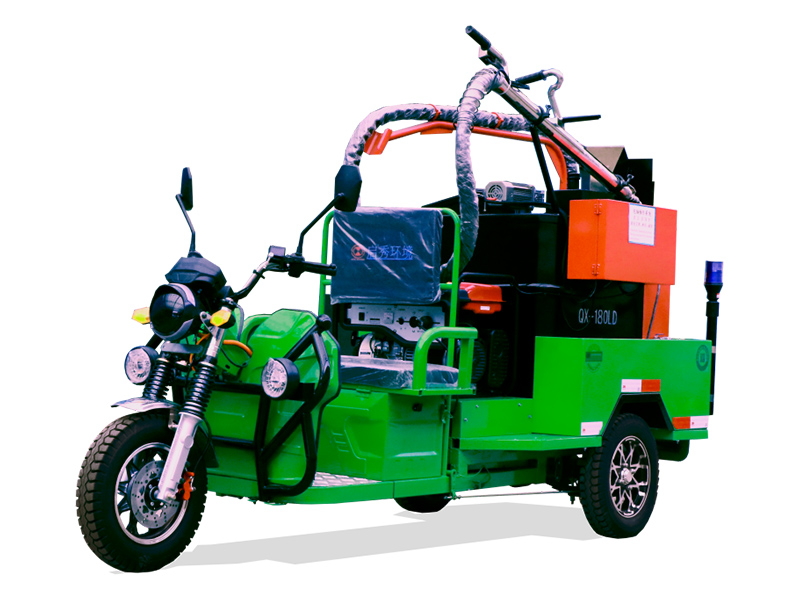
Heating and Melting: Put the crack sealant into the silo of the stainless steel crack sealing machine, heat to 180 – 220℃, and stir evenly until it is free of particles and bubbles.
High-Pressure Sealing: Start the gear pump of the crack sealing machine, inject the molten crack sealant into the cracks under high pressure until the cracks are filled and 2 – 3mm higher than the pavement surface to form a sealing strip.
Cooling and Curing: Cool naturally at room temperature for 1 – 2 hours, or accelerate cooling with a fan, and open to traffic after curing.
Post-Cleaning: Clean the excess crack sealant on the pavement to keep the pavement tidy.
No heating required. Directly inject the sealant into the cleaned cracks with a caulking gun or manual glue injector, smooth the surface, and cure at room temperature for 4 – 6 hours before opening to traffic. Suitable for small-scale emergency repairs.
Applicable Scenarios
Asphalt Pavement Maintenance: Repair temperature shrinkage cracks, load cracks and reflection cracks on pavements, suitable for widths from 0.5mm to 50mm.
Cement Pavement Maintenance: Seal expansion joints and construction joints of cement pavements to prevent rainwater from penetrating and causing panel voiding and fracture.
Airport Runways/Aprons: High-grade modified crack sealants are used for runway crack sealing to withstand heavy-load impact of aircraft takeoff and landing.
Parking Lots/Squares: Repair cracks on the ground of residential and shopping mall parking lots and municipal squares to improve ground flatness and durability.
Storage and Precautions
Storage Conditions: Store sealed in a cool and dry place, avoid direct sunlight and high-temperature baking, shelf life is 12 – 18 months.
Construction Taboos: Construction is prohibited on rainy, snowy or wet pavements; when the construction ambient temperature is below 5℃, low-temperature special crack sealant should be selected.
Safety Protection: Wear high-temperature resistant gloves and goggles during hot-melt construction to prevent scalding by high-temperature sealant; keep the construction site away from open flames.